
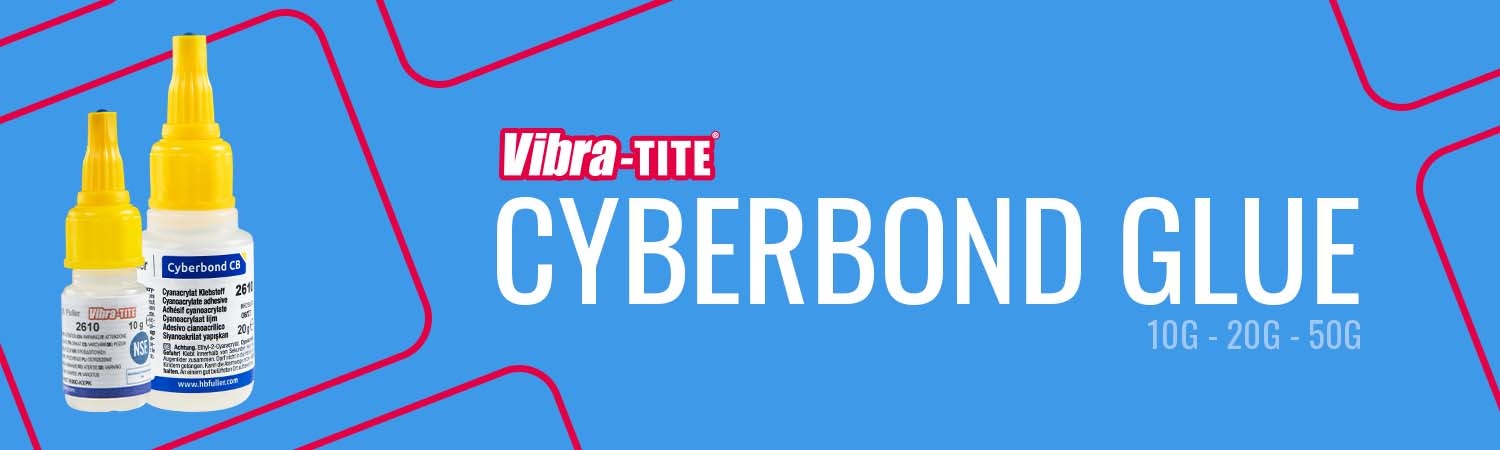
VIBRA-TITE CYBERBOND CB2610
A fast-curing, medium-viscosity cyanoacrylate that bonds wood, leather, metal, rubber and most plastics in seconds — built for repairs that need to hold on the first try.
The Vibra-Tite Cyberbond CB2610 is a one-component cyanoacrylate adhesive designed to bond across mixed materials without needing a different glue for every surface. Its medium viscosity sits just thick enough to stay where it's placed rather than soaking away into porous surfaces like wood or leather, so it sets in 1 to 3 seconds on most materials and within around 40 seconds on wood. Once cured, the bond stays stable across a wide temperature range, from -55°C to +80°C, making it suited to gear that sees real outdoor use rather than just workshop repairs. Available in 20 g and 100 g bottles.
KEY FEATURES
- Medium-viscosity formula that bonds without soaking in – At 90 to 140 mPa·s, the adhesive sits on the surface rather than wicking away into wood grain or leather fibres, giving a stronger, more controlled bond line on porous materials.
- Instant-setting cure across mixed materials – Sets in as little as 1 to 3 seconds on plastics, metals and rubber, and in under a minute on wood, so a repair can be back in use the same session instead of waiting on clamps overnight.
- Wide temperature tolerance from -55°C to +80°C – The cured bond stays reliable whether the repaired gear ends up in a cold car boot before a hunt or a hot one on the way to the range, rather than softening or going brittle with the weather.
SPECIFICATIONS
- Chemical Type: Modified ethyl cyanoacrylate ("neomer" technology)
- Viscosity: 90 to 140 mPa·s (medium)
- Cure Time: 1 to 3 seconds (most materials); approx. 40 seconds on wood
- Density: 1.06
- Temperature Resistance: -55°C to +80°C
- Materials Bonded: Wood, leather, rubber, metal, paper, fabric, ceramic, painted surfaces, and plastics (ABS, acrylic, polycarbonate, nylon, polypropylene, polyethylene)
- Compatible Activator: CB 9090 (for low-surface-energy materials)
Note: Use the CB 9090 activator on low-surface-energy plastics such as polypropylene and polyethylene for a faster, more reliable bond.